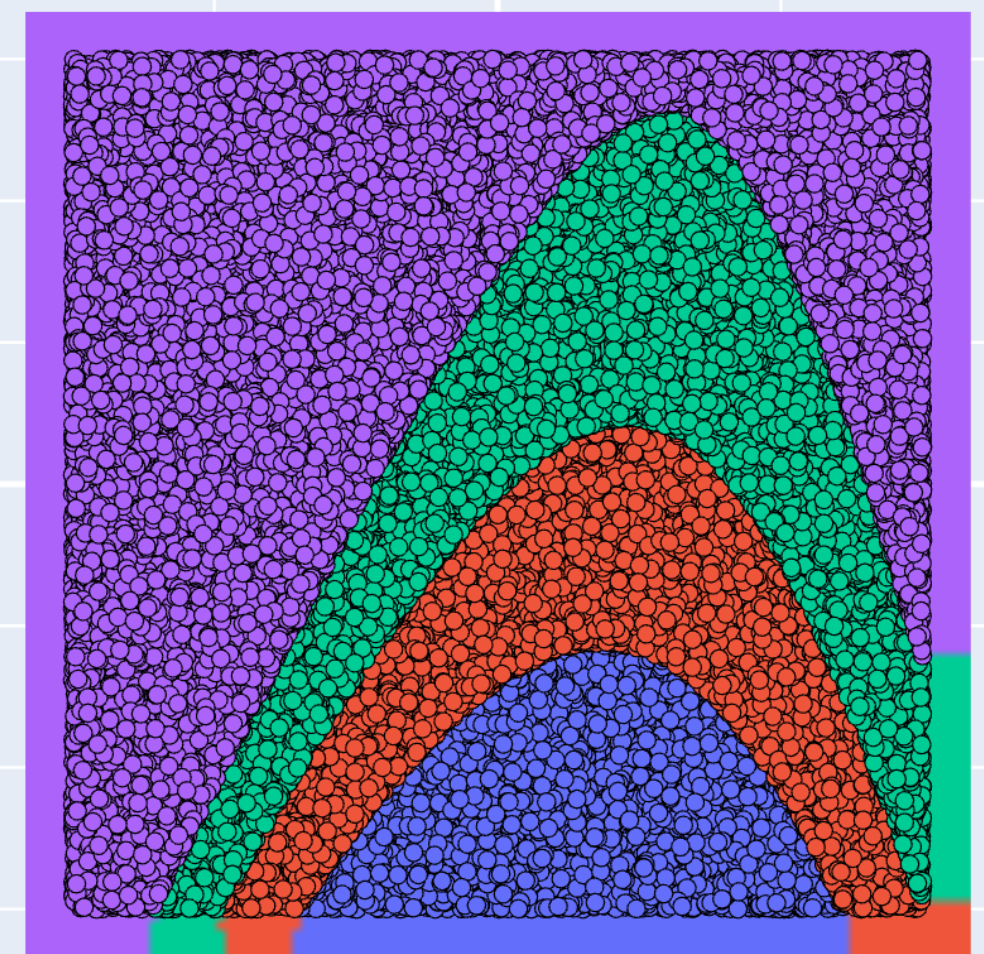
Implicit Piece-wise polynomial relatiosnships
Overview of the section
The rationale behind the need for piece-wise polynomial representation has already be discussed and explained in piece-wise polynomials section.
In a nutshell, these relationships enable to handle non purely polynomial dependencies (trigonomic, rational fractions, exponential to cite but few ones), but more importantly, they enable to handle multiple context of use where the nature of relationships changes drastically and in a way that is not necessarily indicated in the dataset though context related indicators.
Searching for piece-wise multi-variate polynomials can be done using the pwpol module of the MizoPol package.
Nothing can be better than specific use-cases studies where instantiations of such circumstances are studied.
In the present section, we shall consider the following sets of use-cases:
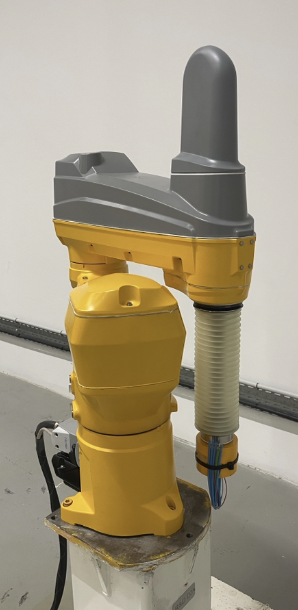
- The manipulator robot case
-
Where the precision of the residuals when standard multi-variate relationships are identified by the
pwpolmodule and the ones that might be obtained used piece-wise polynomial are compared. This use case illustrate the case where the true relationships are not rigorously polynomials.
This use-case is detailed in the robot use-case
- The anaesthesia dataset
-
Where it is shown how the
pwpolmodule can be used to characterize the normality over a large number of datasets coming from operation rooms enabling the detection of anomalous events during the surgery depsite the wide class of operations type and medical staff.
This use-case is detailed in the anaesthesie use-case

- The multi-context Kaggle Benchmark dataset
-
Where a publicly available dataset is used to show the ability of the
pwpolmodule to define normality and to detect parametric faults that arise only in a specific context of use among others where the context defining variable is not available to the algorithm.
This use-case is detailed in the multi-context-banchmark use-case